
Research instrument · Project record · Not a public editor
Zeditor
A subtractive editorial instrument. Zeditor does not rewrite, complete, or improve a text. It reads what each passage contributes, proposes what could be removed under a conservative rule, and leaves the cut to a human. The knife is never automatic.
Purpose
Most writing tools add. Zeditor only takes away — and only proposes. A model supplies readings, the runner turns those readings into a proposal through one frozen rule, and a human rules on the cut. No layer is allowed to speak as another: a model's reading is not a decision, and a proposed removal is not a claim that the passage was worthless.
The discipline is conservative by construction. A passage is proposed for removal only when it is read as low on every governing scale, carries no connective work, and can be deleted without breaking the grammar around it. Everything else is kept, or marked for a human to look at.
How it reads
A first pass divides the text into units and reads how much weight the author seems to claim for each. A second pass reads each fixed unit on the named-six scales, plus a removal test:
- Necessity — would the answer lose something needed if this were gone? Ornamental → Essential.
- Consequence — what changes downstream because this exists? Inert → Transformative.
- Carrier — how much connective work holds the reasoning together here? Comprehension, never cadence. Detached → Backbone.
- Claimed Bearing — how much weight does the author signal, read on presentation alone, before any judgment of truth.
- Removal test — would deleting exactly these characters force a rewrite or break a reference? clean / breaks.
The v0.5 question
A long-standing suspicion inside the instrument: perhaps Necessity is just Consequence wearing another name, and asking both is asking twice. v0.5 tests it directly. The same nine pilot texts, cut into the same 211 segments, are read by two arms — a Full arm that reads Necessity and Consequence, and a Reduced-A arm that drops the Necessity question. Consequence supplies the weight reading in Reduced-A; Carrier and removal integrity still protect against deletion. Both arms read identical segments, holding segmentation fixed while comparing two reading-and-decision configurations.
Concept maps → observed data
The idea, then the observations
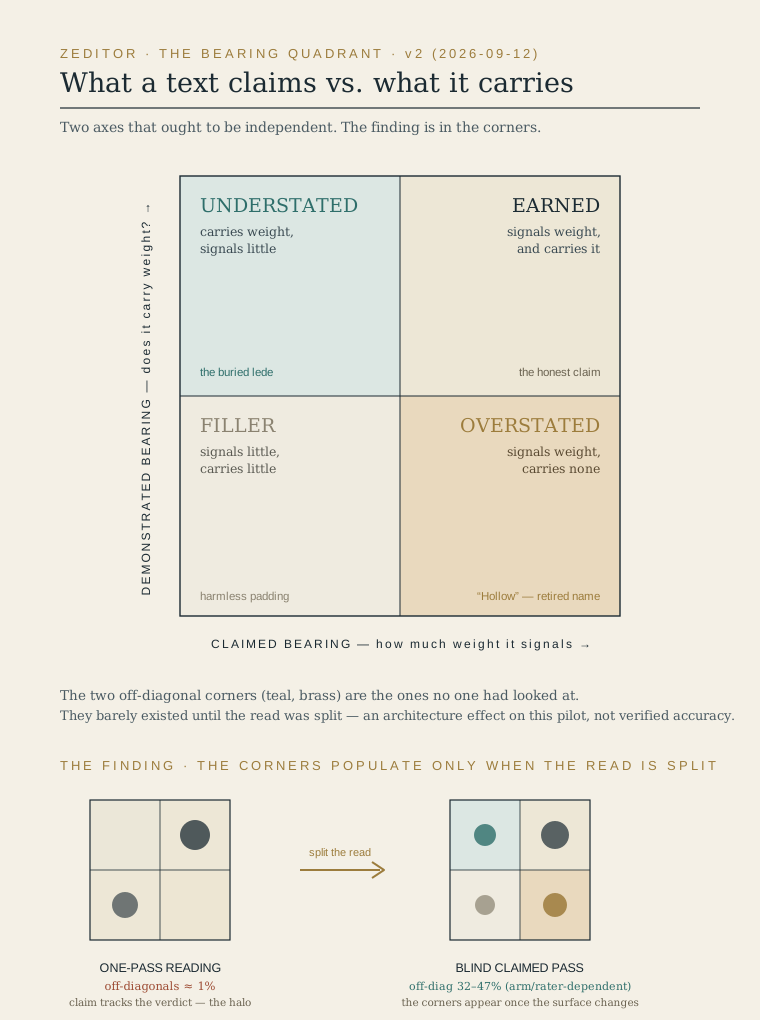
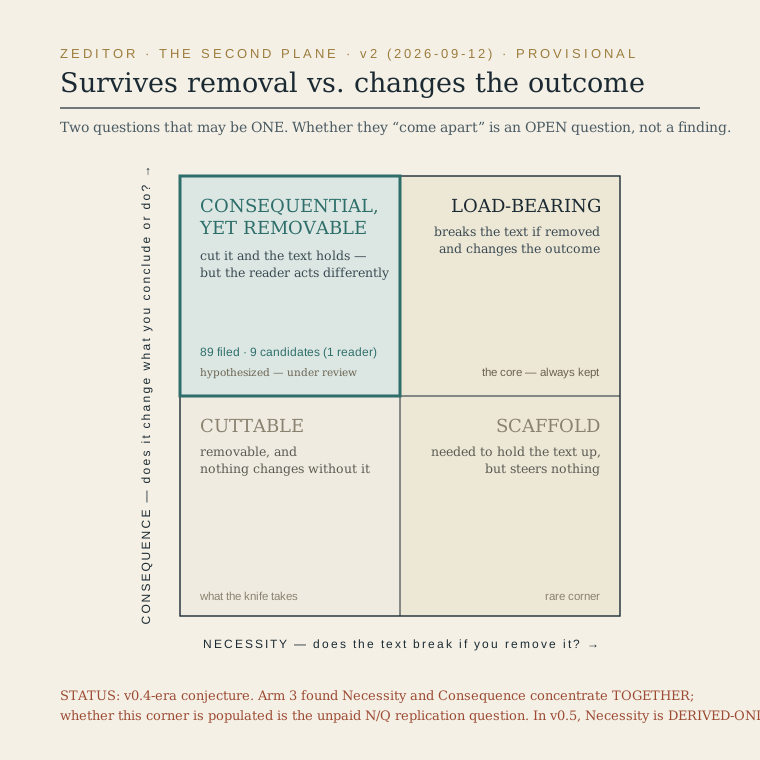
These maps frame the questions; their quadrant labels are not validated editorial verdicts. The one-pass/split-pass comparison does not establish causation. “Cuttable” is not permission to delete without Carrier, removal-integrity checks, and human review. The statement that Necessity is “derived-only” does not describe the v0.5 Full arm: Full directly reads Necessity, while Reduced-A omits that question.
What the v0.5 pilot recorded
DESCRIPTIVE DATA · COMPLETED PILOT · NOT THE NEWER R2 RUN
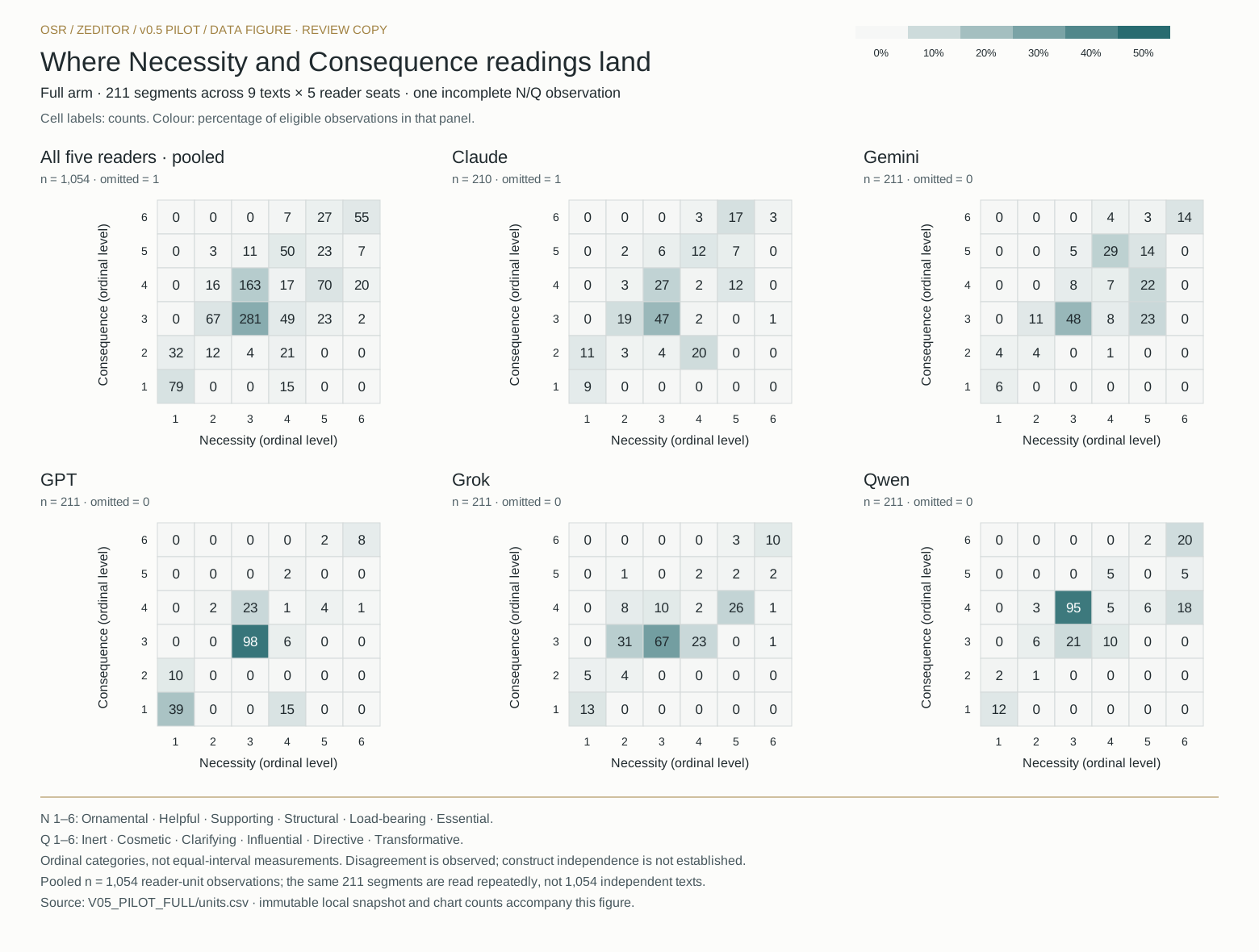
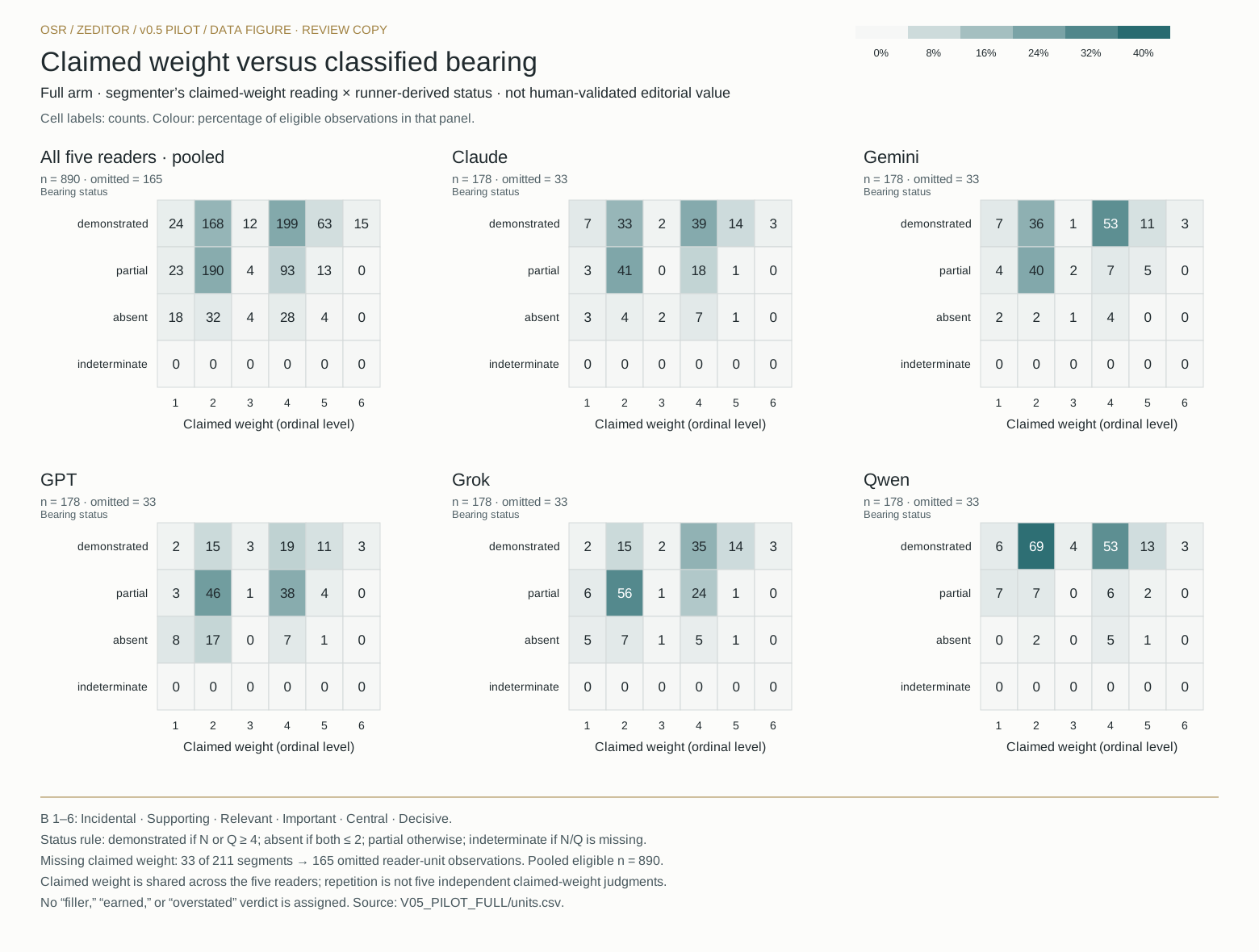
Nine texts, 211 segments, five reader seats. Each figure shows the pooled result alongside every reader separately. Click a figure to enlarge it. Cell labels are counts; colour represents the share of eligible observations within each panel, using the same scale across its panels.
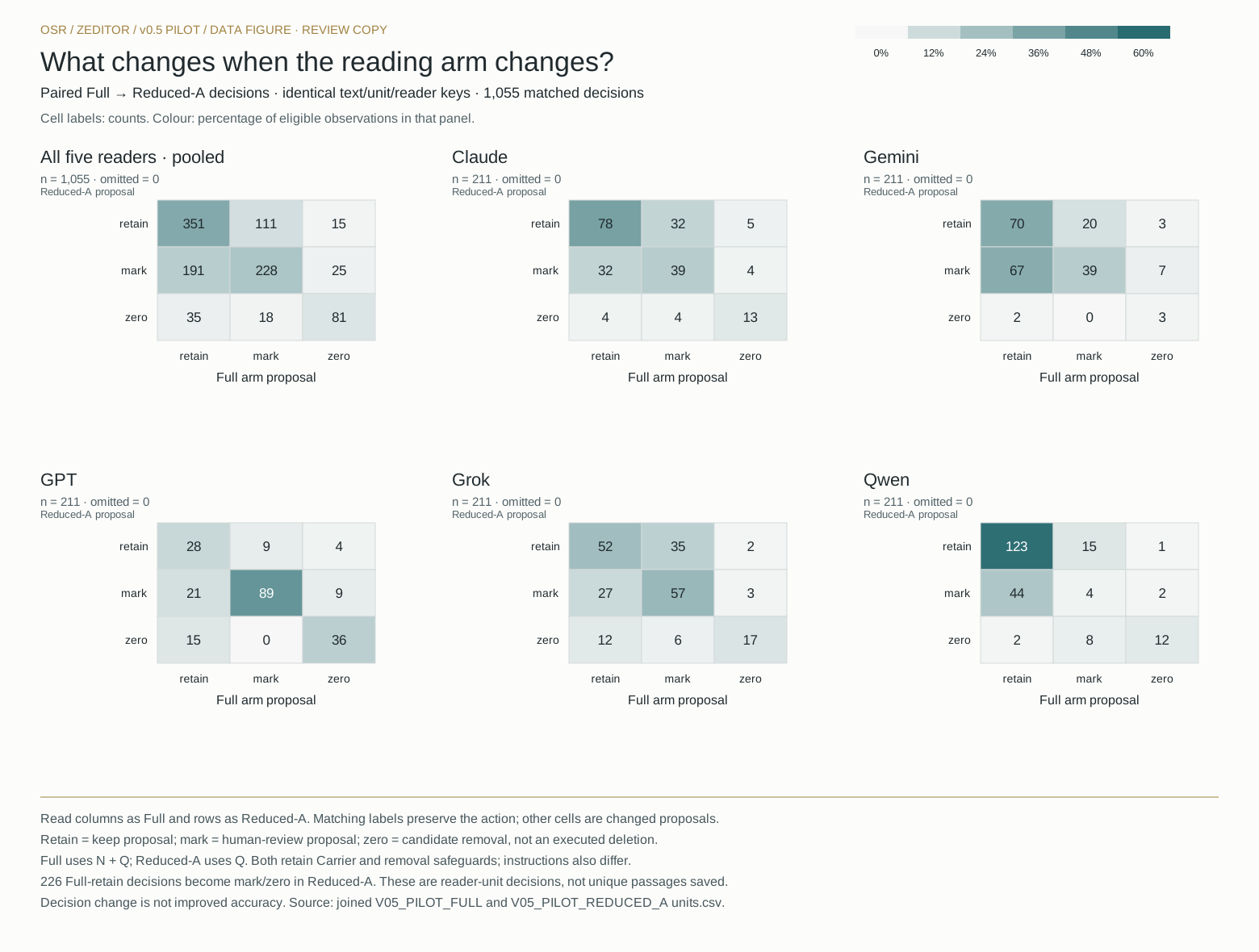
Download the aggregate figure counts (CSV). Sources: the Full and Reduced-A pilot units tables, joined by text, reader, and unit. All 2,110 recorded status/action pairs were checked against the documented D1 rule. The Full pilot’s history records a runner override; these figures describe stored outputs, not a claim of uniform runner history or human-validated editing accuracy.
Pilot observation · 2026-09-12 · C · interpretation reviewed with DEX & Calder
Does Necessity earn its question?
PRELIMINARY · PILOT · PENDING HUMAN ADJUDICATION
Necessity and Consequence move together — they correlate at r = 0.71, and their average reads nearly match. Those summaries do not establish interchangeability. Across 1,054 complete N/Q reader-unit observations, the two scales land on the same level about 44% of the time. These are repeated reader judgments on 211 segments, not 1,054 independent passages. The chart describes disagreement; it does not by itself establish distinct constructs or useful editorial decisions. One of the 1,055 possible N/Q observations is incomplete.
The consequence for the cut is direct. Drop the Necessity read and better than one decision in three changes: paired agreement between the arms is 62.6%. And the change has a direction — 226 reader-unit decisions retained in Full became cut or marked in Reduced-A, 98 of them associated with high Necessity and modest Consequence in Full. These are candidate protections for investigation, not 98 independently verified passages saved from harm.
- N and Q agree exactly on about 44% of complete reader-unit observations (Pearson r = 0.71 on ordinal level codes, descriptive). Equivalence remains unestablished.
- Dropping the Necessity read moves 37% of decisions and lowers retention by roughly ten points.
- 98 changed reader-unit decisions combine high Necessity with modest Consequence in Full; their editorial value still needs adjudication.
What would change our mind
This shows Necessity changes the cut, not that its cut is right. If a cold human review found those candidate protections to be overcaution — passages that could leave without loss — the case for asking Necessity separately would weaken, though harmless does not mean a cut is useful. Review of these cases is distinct from PAD-1's controlled insertion test. This pilot alone has not established editorial validity. Not contesting a reading is not the same as verifying it.
Calibration · 2026-09-12 · C
The readers are not one voice
OBSERVATIONAL · PER-READER COMPONENTS ALONGSIDE POOLED SUMMARIES
Zeditor reads with a panel, and — as Metric the Metric found for scoring — the panel does not agree on how freely to cut. On the identical 211 segments, one reader proposes a cut or a flag on about seven spans in ten; another leaves four in five untouched. This is a configuration-specific difference on these texts, not yet a stable temperament estimate. The per-reader components below accompany the pooled summaries rather than being replaced by them.
| Reader (provider-reported family/ID) | Retain | Mark | Cut | Thinking* |
|---|---|---|---|---|
| qwen-max | 80% | 13% | 7% | none |
| gemini-2.5-flash | 66% | 28% | 6% | heavy |
| claude-haiku-4-5 | 54% | 36% | 10% | none |
| grok-4.3 | 43% | 46% | 10% | light |
| gpt-4o | 30% | 47% | 23% | none |
Full arm, 211 segments per reader; percentages rounded. *Thinking labels summarize the pilot report's configuration/usage description, not independently observed internal reasoning or a common controlled setting. Reader and configuration effects are not separated here. Names are shortened where needed: Claude reported claude-haiku-4-5-20251001 and GPT reported gpt-4o-2024-08-06. Grok was requested as grok-3 and reported grok-4.3; provider reports are not independent verification of served identity.
Comparison · 2026-09-12 · C
What the Necessity question is worth, in cuts
PAIRED · SAME SEGMENTS · PRELIMINARY
The two arms across 1,055 reader-unit decisions each, side by side. In Reduced-A the instrument retains about ten percentage points fewer units — retention falls from 55% to 45%, most of it moving into mark for review rather than into outright cuts.
One honesty keeps the comparison from overclaiming: a live two-arm run mixes two effects — the rule dropping Necessity from the decision, and the model reading the other scales differently when it is not also asked Necessity. A no-cost companion, applying the Reduced rule to the Full arm's own reads, can separate the two; it has not yet been run.
A changed decision is an observation. A better decision still has to be demonstrated.