Method
Survival Index
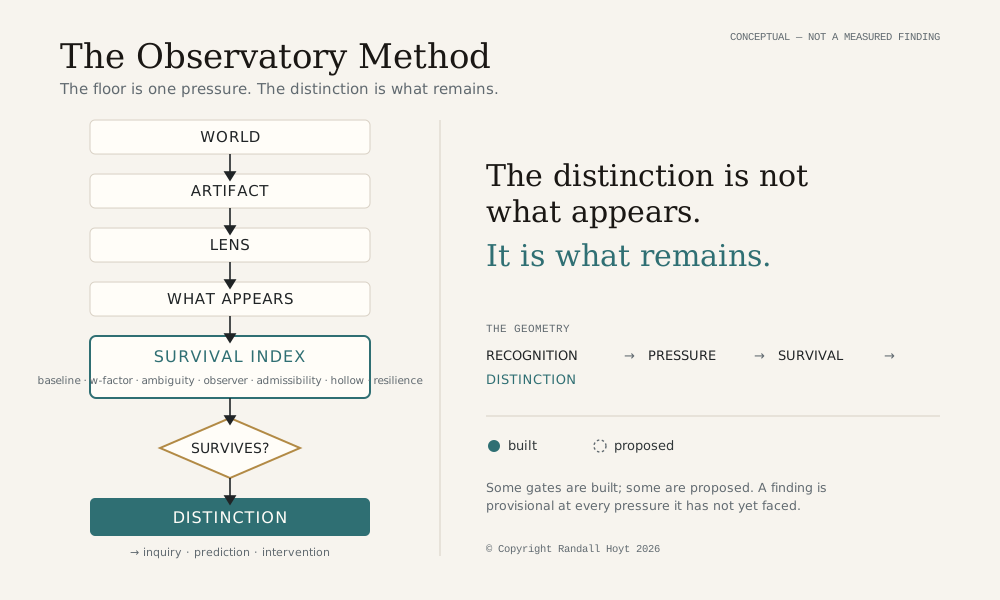
A finding is not believed because it appears. It is believed because it survives a stack of named ways it could have been faked.
The idea, plainly
When a model is given a reasoning tool and its answers look better, the obvious move is to announce a result. The Observatory does the opposite first. Before a difference is allowed to count, it has to pass a line of suspicions — each one a specific, ordinary way a result can look real without being real. What comes out the far side is not "the truth"; it is "what is left after the known figments are removed."
It replaced a single floor
Earlier work spoke of one threshold — a "floor" a result had to clear. That was too simple. A result can clear a statistical floor and still be an artifact of how long the answer was, who was watching, or how the question was phrased. So the floor became a stack: the floor is one pressure among many.
Naming the false signals
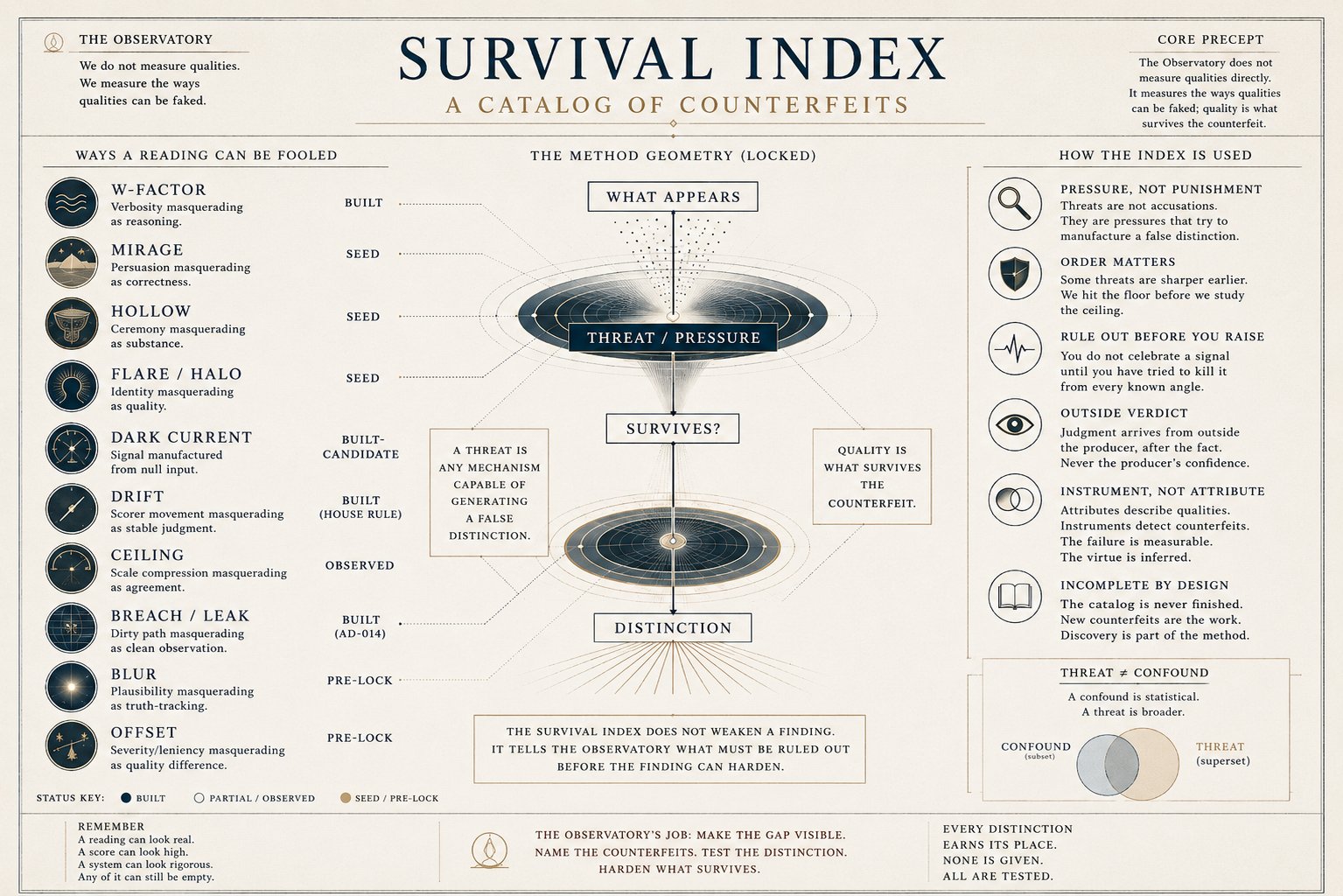
The deeper move is in how the stack is built. Each probe is named not for the virtue it certifies but for the specific illusion it catches. That turns the method into a generative map: to add a new check, you name a new way a result can fool you.
| Probe | Catches… |
|---|---|
| W-Factor | verbosity masquerading as reasoning |
| Mirage | persuasion masquerading as correctness |
| Hollow | ceremony masquerading as substance |
| Dark Current | signal manufactured from null input |
| Sham (TBNB) | machinery masquerading as mechanism |
| Flare | identity masquerading as quality |
| Drift | scorer movement masquerading as stable judgment |
| Ceiling | scale compression masquerading as agreement |
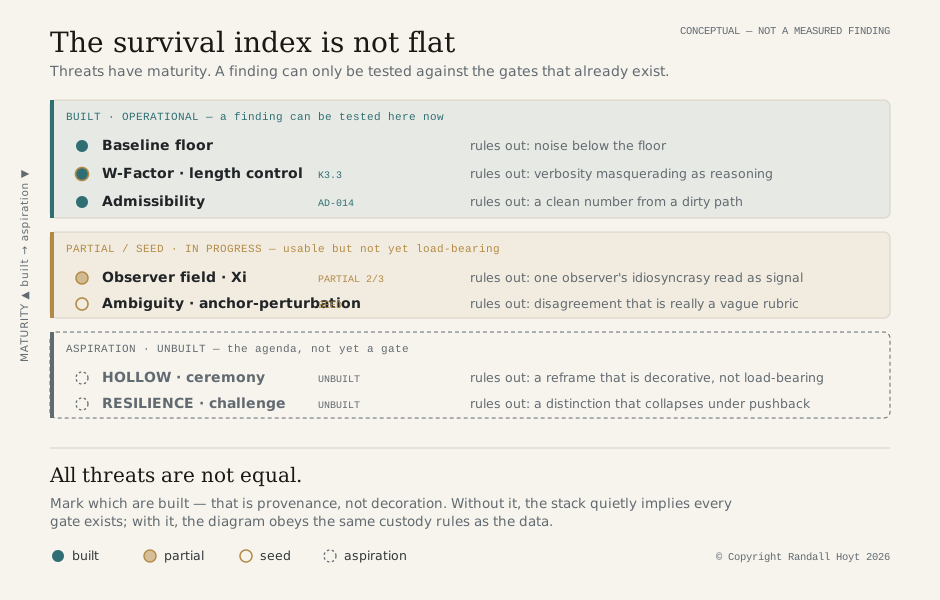
PRELIMINARY · several probes are still seeds, not built
Not all of these exist yet. Some are built and have already caught real artifacts; others are seeds. The diagram below carries that honesty layer — which probes are operational, partial, or still proposed — so the picture never implies more than has been built.
Why it matters
This is the part of the work that is most finished, and the part we are most willing to stand behind today. The individual results that pass through the stack remain preliminary candidates pending independent verification — but the discipline that produces them is the durable object. The Observatory does not measure quality directly; it measures the ways quality can be faked, and lets quality emerge as the survivor.