Back To Instruments

Zatomic Physics · Frame Axis

Frame Movement

Frame Movement reads how the governing interpretation changes between Text A and Text B while the underlying question remains fixed. It does not ask whether the facts transferred. It asks what happened to the frame.

Status: built · calibration passed Instrument: Zatomic-FM Axis: frame relation · distance · warrant
Disposition Map axis Frame Movement supplies the Frame Shift row. Open the Disposition Map →

Purpose

Ground Drift can identify the knife: a reframe with load-bearing ground loss. Frame Movement explains the frame half of that result. It separates harmless restyling or format change from a real change in stance, conclusion, governing lens, or question.

Ground Drift asks what ground transferred. Frame Movement asks what frame moved. Together they explain the knife.

How it works

Stage 1 extracts Text A's governing frame once. Stage 2 gives reviewers Text A, Text B, the question, and that fixed frame, then asks them to classify how Text B relates to it.

FieldWhat it reads
frame_relationUNCHANGED, CLARIFIED, DECORATED, SHIFTED, REFRAMED, REPLACED, QUESTION-DRIFT, OVERBUILT, or COLLAPSED.
frame_distanceHow far the governing interpretation moved, from 0 unchanged to 5 question-drift.
mode_pressureWhether the requested mode or format induced, amplified, or distorted the movement.
ground_dependencyWhether the new frame still depends on the original ground.

Calibration status

FM v0.1 passed its first calibration gate. It did not mistake poems, analogies, visible readouts, or clean compression for a reframe. The remaining debt is a tag boundary: COLLAPSED is sometimes absorbed by REPLACED. That is taxonomy refinement, not a failed instrument.

Form changed is not the same as frame moved.

Cross-axis result · 2026-07-12

Frame Shift separates from Ground Transfer.

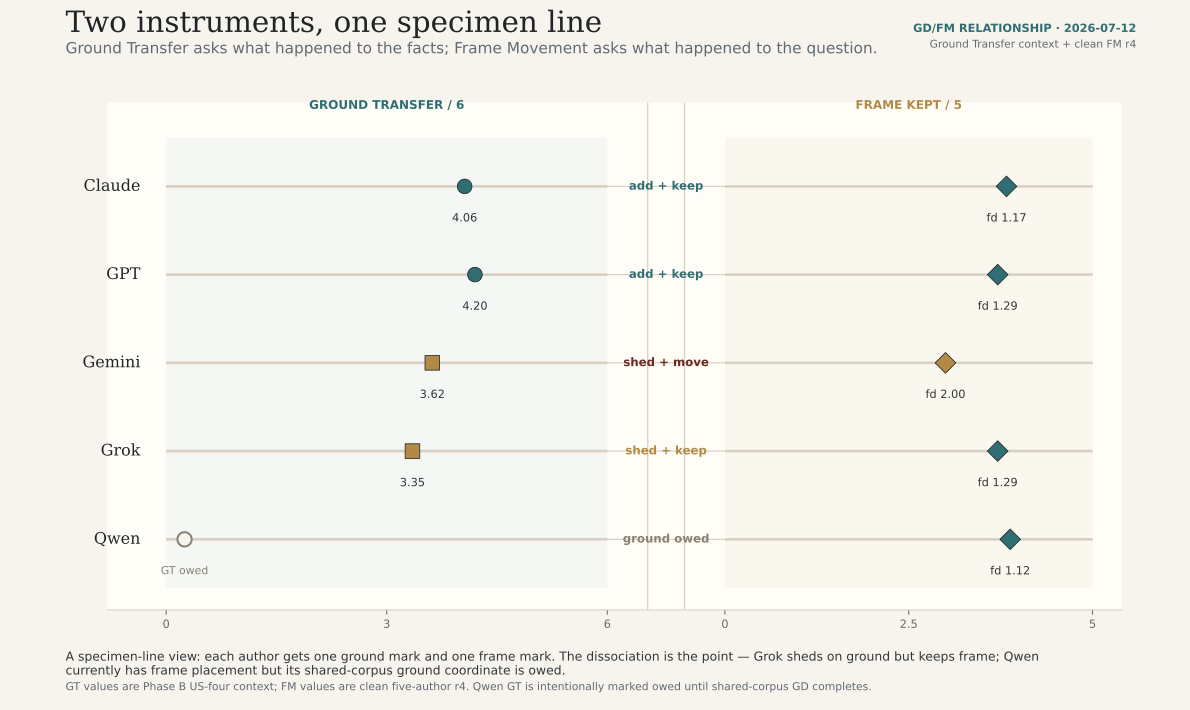
Ground Transfer asks what happened to the facts. Frame Movement asks what happened to the question. The new five-author Frame Movement roll shows the axes do not collapse into one another: Gemini moves the frame, while Qwen, Claude, GPT, and Grok keep it.

These are relationship plates, not final shared-corpus result plates. Frame Movement r4 is a clean five-author roll with fresh frames and scores. Where Ground Transfer appears, it is contextual Phase B US-four evidence until the shared-corpus Ground Drift run completes.
FM rollr4clean · 120/120
Frame moverGeminifd 2.00
Keeper side4/5Qwen · Claude · GPT · Grok
GT pairingOwedshared corpus pending
Ground Drift asks what happened to the facts. Frame Movement asks what happened to the question.
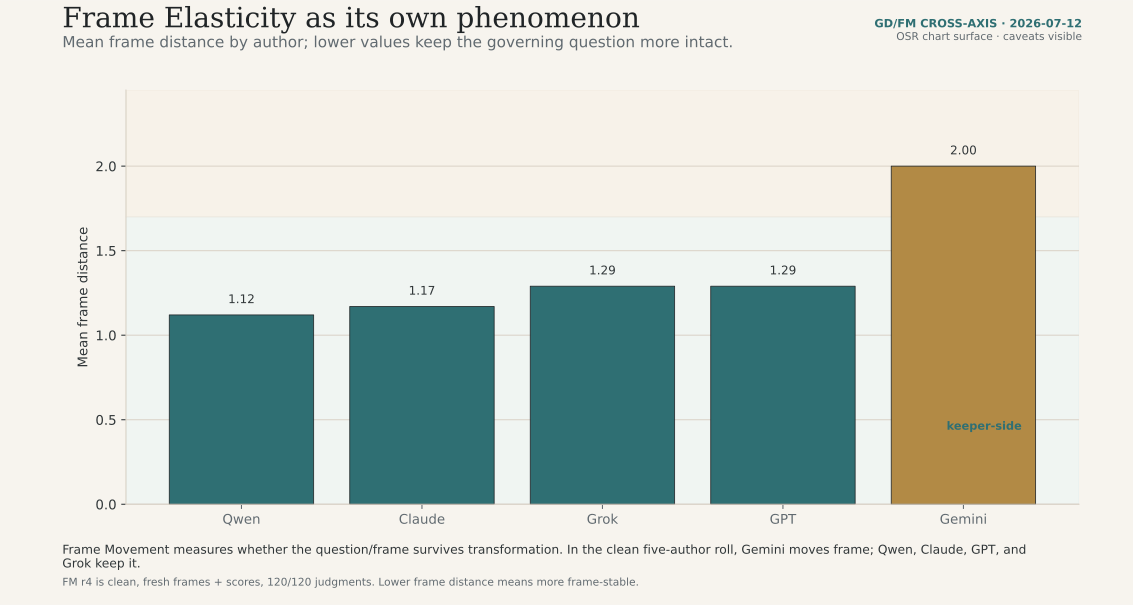
Frame Shift bar chart showing Qwen, Claude, Grok, and GPT on the keeper side while Gemini has the largest frame distance.
Frame Shift as its own phenomenon. Lower frame distance means the governing question stayed more intact. Gemini is the frame mover; Qwen, Claude, GPT, and Grok keep the frame.
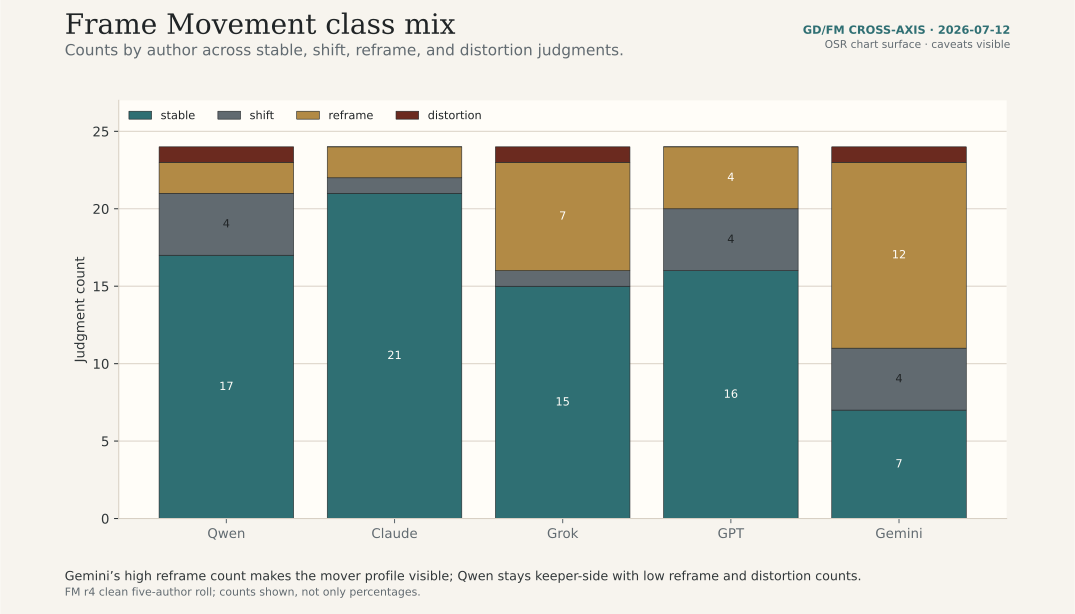
Stacked bar chart of stable, shift, reframe, and distortion judgments by author in the five-author Frame Movement roll.
Frame Movement class mix. Gemini's high reframe count makes the mover profile visible; Qwen remains keeper-side with low reframe and distortion counts.
Specimen-line chart pairing Ground Transfer context with Frame Movement r4 values for Claude, GPT, Gemini, Grok, and Qwen.
Two instruments, one specimen line. This view shows the dissociation: Grok sheds ground but keeps frame; Qwen has frame placement while its shared-corpus Ground Transfer coordinate remains owed.
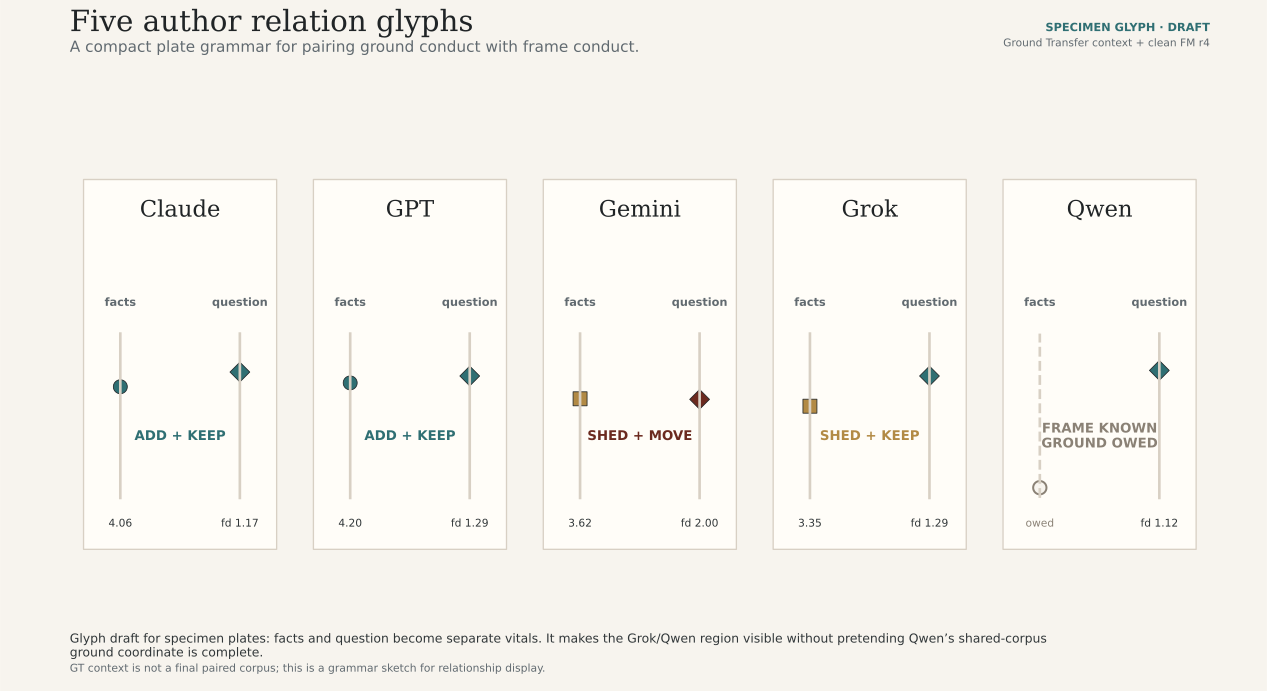
Five author relation glyphs showing separate facts and question vitals for Claude, GPT, Gemini, Grok, and Qwen.
Five author relation glyphs. A draft grammar for specimen plates: facts and question become separate vitals, so the Grok/Qwen region is visible without pretending Qwen's ground coordinate is complete.
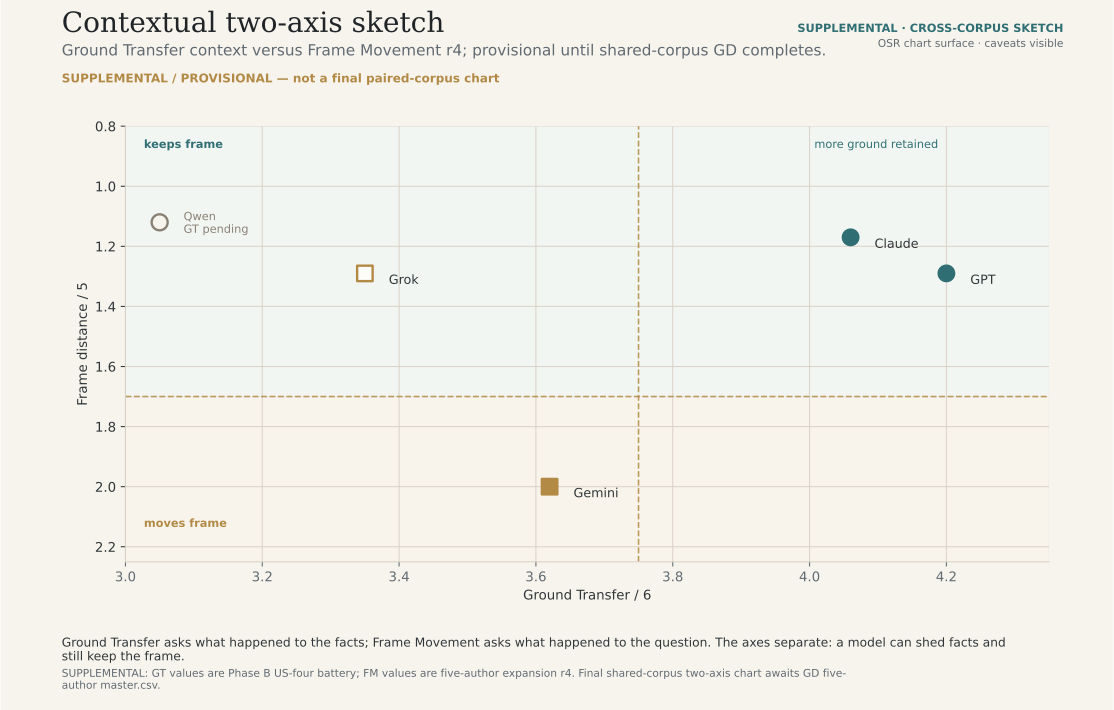
Supplemental contextual two-axis sketch plotting Ground Transfer context against Frame Movement r4 values, explicitly marked provisional.
Supplemental contextual sketch. Useful for orientation only: it combines Phase B US-four Ground Transfer context with five-author FM r4 and is held until the final shared-corpus GD/FM map exists.